
The Paper Guide Paper Grain
Home > The Paper Guide >
Paper Grain
Understanding Paper Grain
Paper grain is the direction in which most of the fibers are aligned within a sheet of paper. Although you usually can't see the grain, it can affect how paper bends, folds, tears and performs in finished projects.
For most everyday printing, paper grain may not make much of a difference. But when paper is folded, scored or bound, choosing the right grain direction can help produce a better finished piece.
The Basics: Paper Grain at a Glance ↴
What Is Paper Grain?
Much like wood, paper has a grain direction that affects how it behaves. If you've ever noticed that wood is easier to split or work with in one direction than another, you've seen the effects of grain firsthand. Paper behaves in a similar way—its grain direction affects its strength, stiffness, flexibility and how easily it folds or tears.
Paper is made from millions of tiny wood fibers. During the papermaking process, these fibers tend to align in the direction the paper travels through the paper machine. This creates what is known as the grain direction.
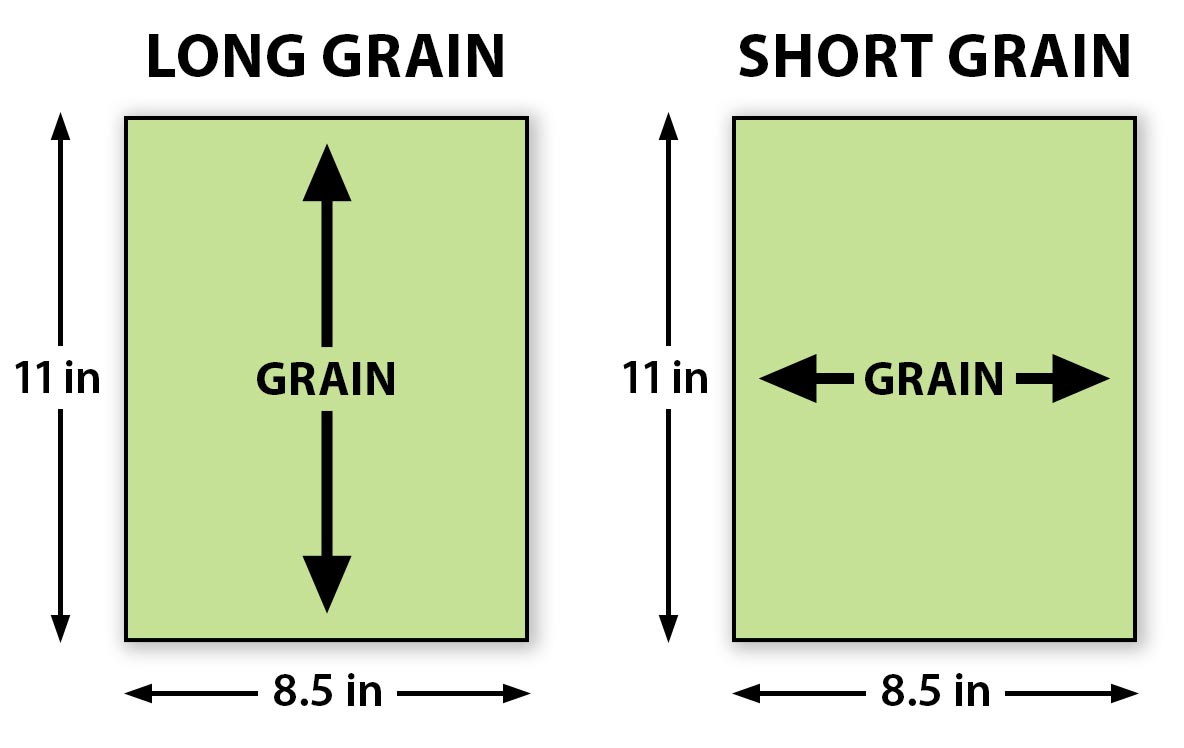
A sheet of paper can be described as either long gain or short grain.
Long Grain
The grain runs parallel to the sheet's longer dimension.
Short Grain
The grain runs parallel to the sheet's shorter dimension.
For example:
On an 8.5" × 11" sheet, long gain runs in the 11" direction, while short grain runs in the 8.5" direction.
Why Does Paper Grain Matter?
Paper behaves differently depending on whether it is bent, folded or torn with or against the grain.
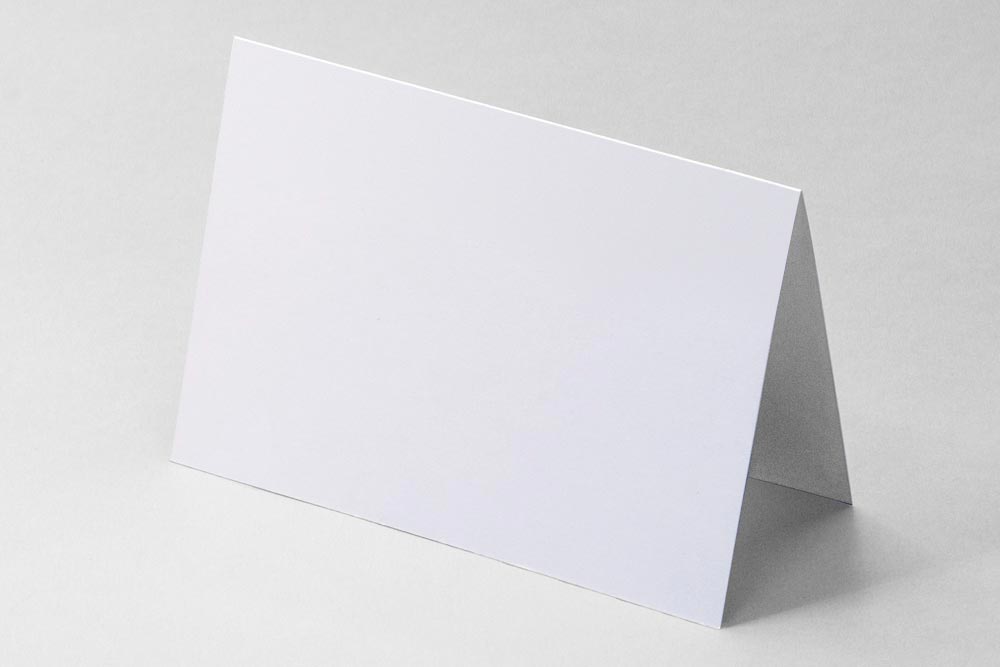
Paper is generally stiffer in the direction of the grain but bends and folds more easily along a fold that runs parallel to the grain.
Folding with the grain can produce a smoother, cleaner fold with less stress on the paper fibers.
Grain direction becomes especially important with heavier paper and cardstock, where folding against the grain can increase the possibility of a rough or cracked fold.
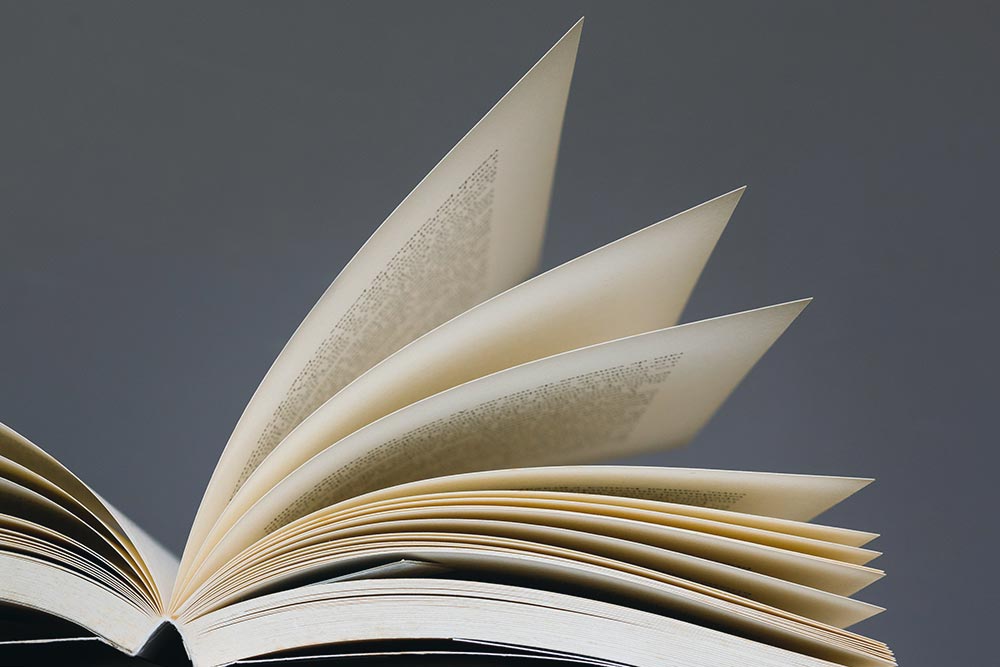
It can also make a noticeable difference in books and booklets. When the grain runs parallel to the spine, pages generally turn more easily and the finished piece can open and lie flatter.
Deep Dive: How Paper Grain Really Works ↴
How Is Paper Grain Created?
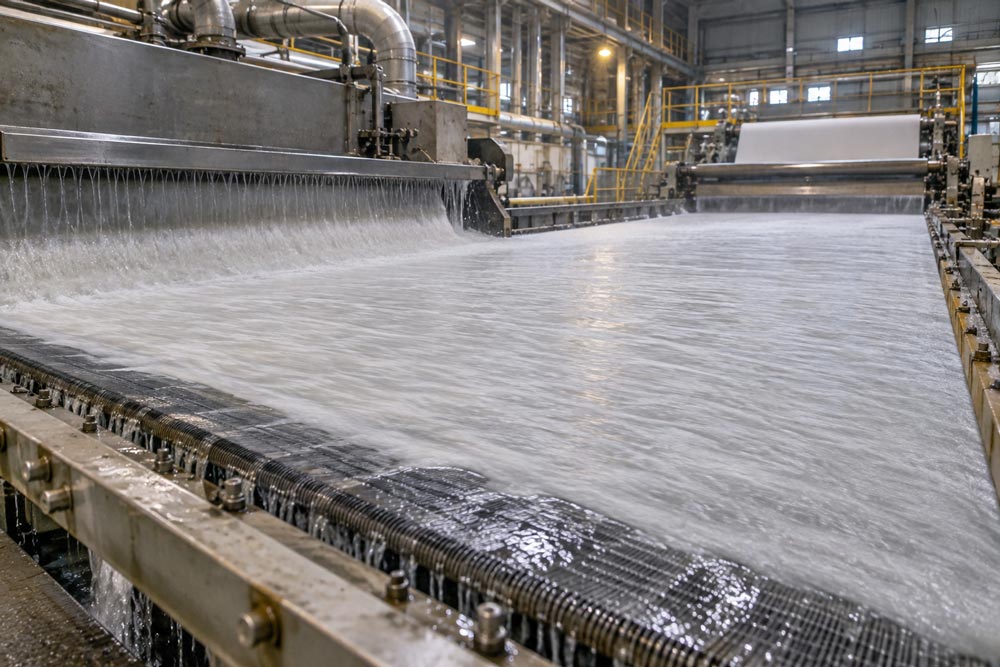
Paper grain begins during the paper forming process. As the mixture of water and paper fibers moves forward along the forming wire of a papermaking machine, many of the fibers become oriented in the same direction the paper is traveling.
Although every fiber does not line up perfectly, enough of them become aligned in the direction of travel to give the finished sheet a predominant grain direction. Once the paper is formed, pressed and dried, this fiber orientation remains and influences how the finished paper bends, folds, tears and responds to changes in moisture.
Within the paper industry, grain direction can also be described as:
Machine Direction (MD)
The direction the paper travels through the paper machine. Most of the fibers tend to align parallel to this direction.
Cross Direction (CD)
Runs perpendicular to the machine direction.
When the large rolls of finished paper are later cut into individual sheets, the orientation of that machine direction determines whether each sheet is considered long grain or short grain.
Why Is Grain Direction Important for Bookbinding?
Grain direction is particularly important in all types of bookbinding, from professionally produced books and booklets to handmade journals, notebooks and craft bookbinding projects.
Ideally, the grain should run parallel to the spine of the finished book.
This allows the pages to flex more naturally when the book is opened, helping pages turn more easily and allowing the finished book to open and lie flatter.
If the grain runs perpendicular to the spine, the pages have greater resistance to bending and may not turn or lie as naturally. This is why bookbinders often specifically look for short grain 11" x 8.5" paper.
With short grain letter-size paper, the grain runs parallel to the 8.5" side of the sheet, making it well suited for bookbinding layouts where the 8.5" edge becomes the spine.
Folding With the Grain vs. Against the Grain
Whenever possible, a fold should run parallel to the grain direction.
Folding With the Grain
Paper folds more easily and cleanly when the fold runs parallel to the grain. This places less stress on the fibers and can help create a smoother finished fold.
Folding Against the Grain
When the fold runs across the grain, the paper offers greater resistance. This can make the fold more difficult and increase the possibility of cracking, particularly with heavier paper and cardstock.
Grain direction becomes increasingly important as paper gets heavier.
Whenever possible, cardstock should be folded with the grain to help create a cleaner fold and reduce stress on the paper fibers. However, heavyweight paper and cardstock may still require scoring before folding.
Scoring creates a controlled line where the paper is intended to fold, helping produce a cleaner and more accurate fold while reducing the possibility of cracking or an uneven crease.
How Can You Find the Grain Direction?
Paper grain direction is often identified on the ream or carton label. When the paper size is listed by its dimensions, the last dimension typically indicates the grain direction. That dimension may also be underlined to make the grain direction easier to identify.
Depending on the manufacturer, grain direction may also be identified with Long (L) or Short (S) on the label. Because labeling methods can vary by paper manufacturer, it's always a good idea to check the product specifications when grain direction is important to your project.
If you do not have the original packaging, one of the easiest ways to determine paper grain is with a simple bend test. Gently bend the sheet in one direction without creasing it. Then repeat the test in the opposite direction. Because paper is generally stiffer in the grain direction, it will typically bend more easily when the bend or fold line runs parallel to the grain.
Choosing the Right Grain Direction
| Application | Grain Consideration | |||
|---|---|---|---|---|
| Everyday Printing | Grain direction is usually not a major concern | |||
| Letters & Documents | Grain direction is usually not a major concern | |||
| Brochures & Folded Pieces | Grain should preferably run parallel to the fold | |||
| Greeting Cards | Grain should preferably run parallel to the fold | |||
| Heavy Cardstock | Grain direction becomes more important; scoring may also be needed | |||
| Books & Booklets | Grain should generally run parallel to the spine | |||
| Commercial Printing & Finishing | Grain may affect feeding, folding, scoring, binding and dimensional stability |