
The Paper Guide Paper Finishes
Home > The Paper Guide >
Paper Finishes
Understanding Paper Finishes
Paper finish describes the surface texture and appearance of a sheet of paper. Some papers have a smooth, uniform surface, while others have a noticeable texture or pattern. The finish can affect how paper looks and feels, how ink sits on the surface, and the overall appearance of the finished piece.
From smooth everyday papers to distinctive Linen, Felt, Laid, and other textured finishes, understanding paper finish can help you choose a paper that looks and performs the way you want.
The Basics: Paper Finishes at a Glance ↴
What Is a Paper Finish?
Paper finish is the surface characteristic of a sheet of paper. It can be created during the papermaking process through pressing, drying, calendaring, embossing, coating or other finishing techniques.
Some finishes are extremely smooth, while others have visible or tactile textures. The finish you choose can influence:
- How smooth or textured the paper feels
- How ink and toner appear on the sheet
- How much light the surface reflects
- The sharpness and detail of printed images
- The overall look and feel of the finished project
One of the easiest ways to begin understanding paper finishes is to divide paper into two broad categories:
Coated Paper & Uncoated Paper
Coated Paper Finishes
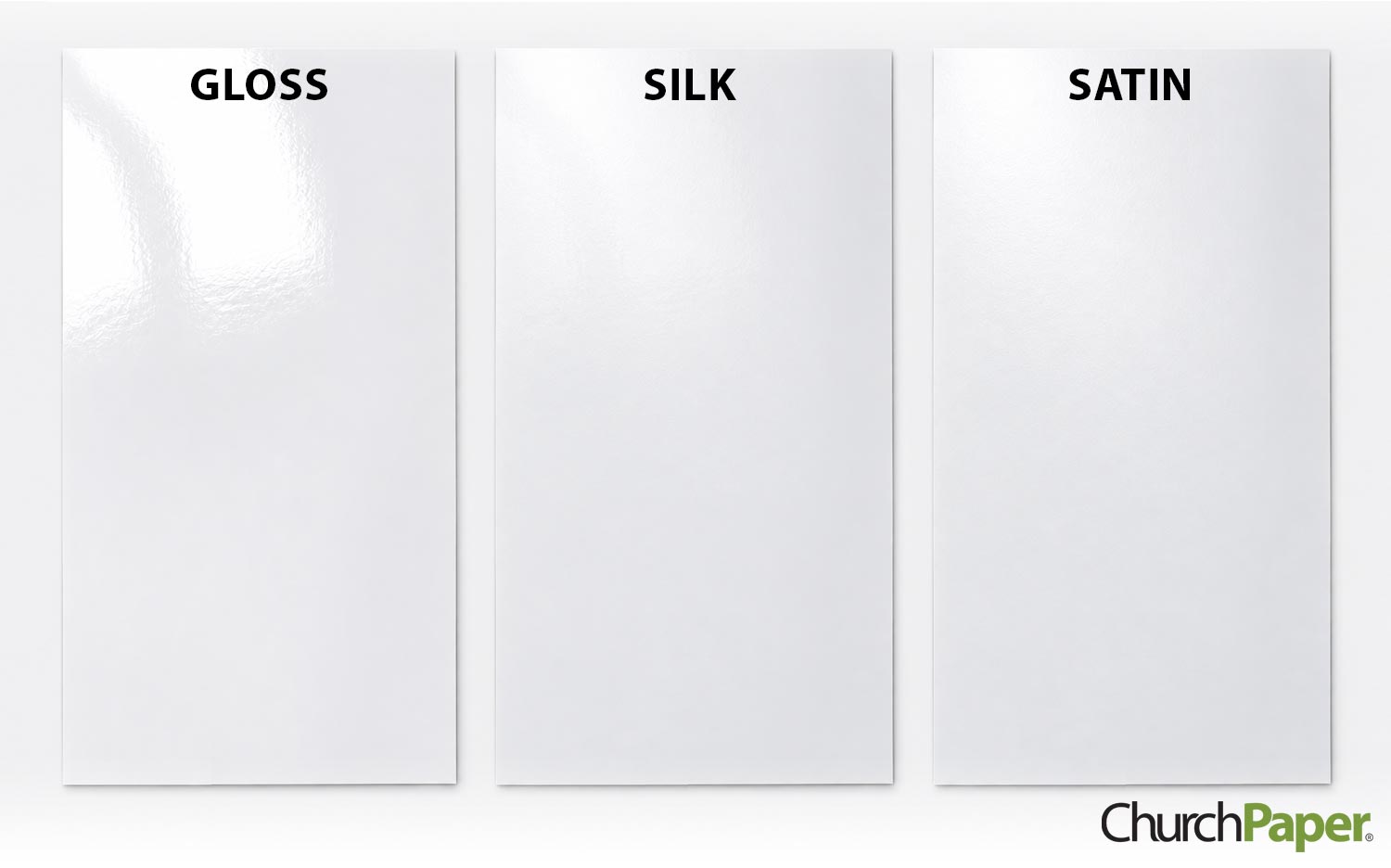
Gloss
Gloss paper has a smooth, highly reflective surface that gives printed colors a rich, vibrant appearance. Its shiny finish helps enhance contrast, sharpness and fine detail, making photographs and graphics stand out. Because it reflects more light than other coated finishes, gloss paper has a polished, high-impact appearance
Silk
Silk paper has a smooth coated surface with a softer sheen than gloss. It reflects some light, helping colors, photographs and fine details appear crisp and vibrant while reducing the glare associated with a high-gloss finish. Silk provides a balance between strong image reproduction and a more subtle, refined appearance.
Satin
Satin paper has a smooth coated surface with a soft, subdued sheen. It reflects less light than gloss and typically provides a lower-sheen appearance similar to silk, while maintaining the smooth surface needed for sharp images and vibrant color. Satin is a good choice when you want the benefits of coated paper with a softer, less reflective appearance.
Keep in mind: Finish names can vary by paper manufacturer. Terms such as Silk and Satin generally describe smooth coated papers with less sheen than Gloss, but the exact level of reflectivity can vary by paper grade. When available, the manufacturer’s gloss rating provides the most accurate way to compare a paper’s actual level of reflectivity.
Uncoated Paper Finishes
Smooth & Super Smooth
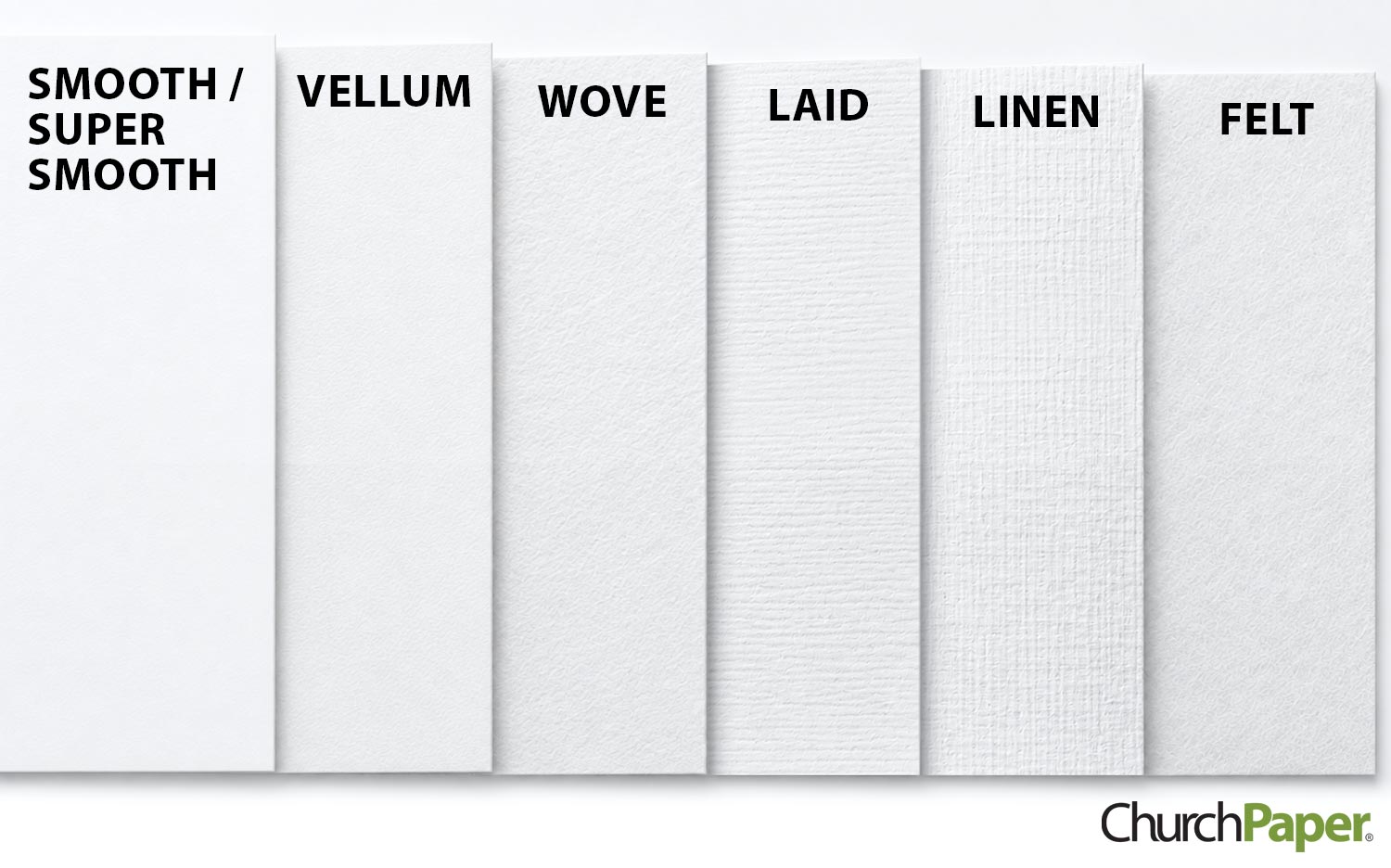
Smooth and Super Smooth paper is not as smooth as coated paper, but they have a more natural feel. These finishes are excellent when fine detail, clean type and crisp reproduction are important.
Vellum
Vellum, also commonly referred to as Eggshell, has a subtle toothy (slightly rough) surface, quite similar to the shell of an egg. This paper provides more texture than a smooth sheet without having the pronounced pattern of Linen or Laid.
Wove
Wove paper has a smooth, slightly textured feel, with a uniform surface without the visible lines found in Laid paper. It is one of the most popular finishes for premium and cotton content papers and is commonly used for white business envelopes.
Laid
Laid paper features a pattern of fine parallel lines, often crossed by more widely spaced lines. This traditional finish is frequently associated with stationery, invitations and formal printed pieces.
Linen
Linen paper has a crosshatched texture designed to resemble woven linen fabric. It adds visual and tactile interest and is popular for stationery, menus, invitations, certificates and other pieces where presentation matters.
Felt
Felt paper has a soft, distinctive texture created to resemble the appearance and feel of felt fabric. Its noticeable texture gives printed pieces a rich, tactile quality.
Deep Dive: How Paper Finishes Really Work ↴
What Is Coated Paper?
Coated paper has a coating applied to its surface, then rollers help "polish" the paper for different finishes. This process fills in the spaces between the paper fibers, creating a smoother and less porous surface.
Because ink stays closer to the surface, coated papers can produce sharper images, finer detail and more vibrant color. This makes coated paper a popular choice for high-end marketing and advertising materials, brochures, photographs and other pieces where image quality and color reproduction are important.

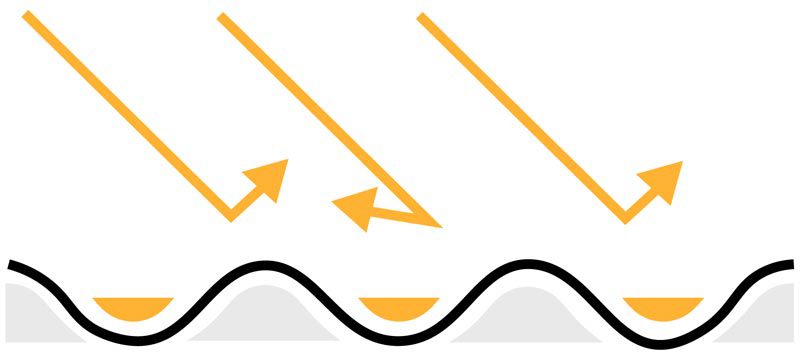
Gloss | High Reflectivity
The very smooth surface creates stronger, more consistent reflection, producing noticeable shine.
Satin/Silk | Medium-Low Reflectivity
The surface creates a combination of reflection and scattering, so you get a softer sheen.
What Is Uncoated Paper?
Uncoated paper does not have the surface coating found on gloss, silk or satin papers. With its natural paper fibers more exposed, uncoated paper is generally less smooth and more absorbent than coated paper, giving it a softer, more tactile feel.
This makes uncoated paper a popular choice for stationery, invitations, menus, bookbinding and other pieces where touch and appearance are important. Uncoated papers range from very smooth surfaces to highly textured finishes, including Smooth, Felt, Laid, Linen, Vellum and Wove.
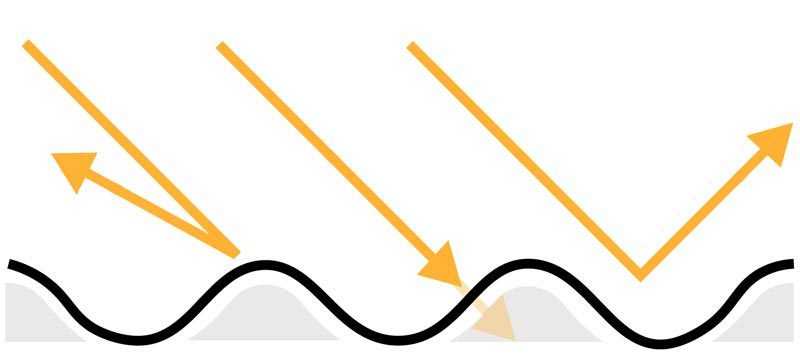
Uncoated | Low Reflectivity
The rougher surface causes light to scatter in many directions while some light is absorbed.
How Is a Paper Finish Created?
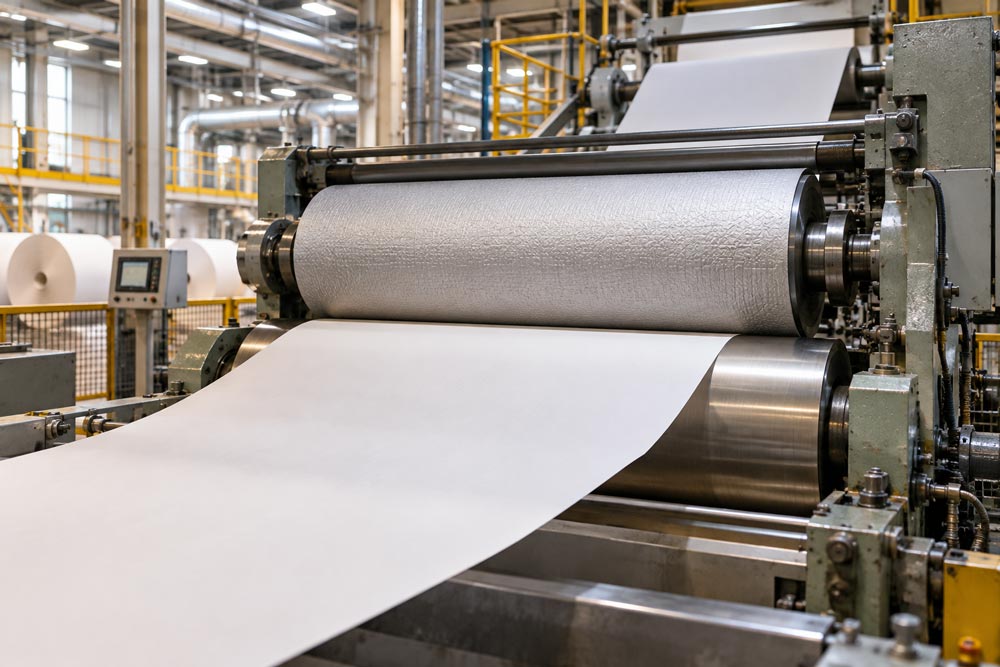
Paper doesn't necessarily leave the papermaking process with its final surface characteristics. Manufacturers can alter the surface of a sheet through several finishing processes. Paper may be pressed against different surfaces, passed through rollers, embossed with a pattern or treated with a coating. Each process changes the surface in a different way. That means:
Two papers of similar weight and even similar measured thickness can feel different in your hand because of their surface finish.
A highly smooth sheet can feel dense and compact, while a textured sheet may feel softer or more substantial.
This is one reason paper shouldn't be selected by weight alone. Weight, thickness and finish all contribute to how a sheet feels.
Paper Finish vs. Paper Coating
Finish and coating are not the same thing.
Paper finish describes the characteristics of the paper's surface—such as smooth, vellum, linen, laid or felt.
A coating is a material applied to the surface of paper to alter its printing and appearance characteristics. Coated papers are commonly available in finishes such as gloss, semi-gloss, satin or matte and are frequently used for magazines, brochures, catalogs and high-end marketing materials.
An uncoated paper can still have a very distinct finish. Linen, laid, felt and vellum papers are good examples.
So when a paper is described as uncoated, that doesn't mean it has no finish or texture.
How Paper Finish Affects Printing
At a microscopic level, paper isn't perfectly flat. Its surface is made up of fibers, tiny peaks, valleys and spaces between those fibers.
On a smooth or coated surface, ink tends to remain closer to the surface, allowing printed dots, fine lines and small details to retain their shape.
On a more textured or porous surface, ink can penetrate farther into the sheet and interact with the uneven surface. This can create a softer printed appearance.
This is why highly detailed photographs and graphics generally benefit from smoother papers, while textured papers are often chosen when the character of the paper itself is part of the design.