
The Paper Guide Paper Perforation
Home > The Paper Guide >
Paper Perforation
Understanding Perforated Paper
Perforated paper makes it easy to create clean, detachable sections within a single sheet. A series of precisely spaced cuts creates a perforated line that can be folded and torn when needed, allowing part of the sheet to be removed while the rest remains intact.
Perforations can turn an ordinary sheet of paper or cardstock into reply forms, tickets, coupons, payment stubs, door hangers, postcards and other useful tear-off pieces. They are especially popular for church bulletins, business forms, event materials and direct mail.
At Church Paper, we offer a variety of popular perforation configurations and can also custom perforate many of our papers and cardstocks to your specifications.
The Basics: Perforated Paper at a Glance ↴
What Is Perforated Paper?
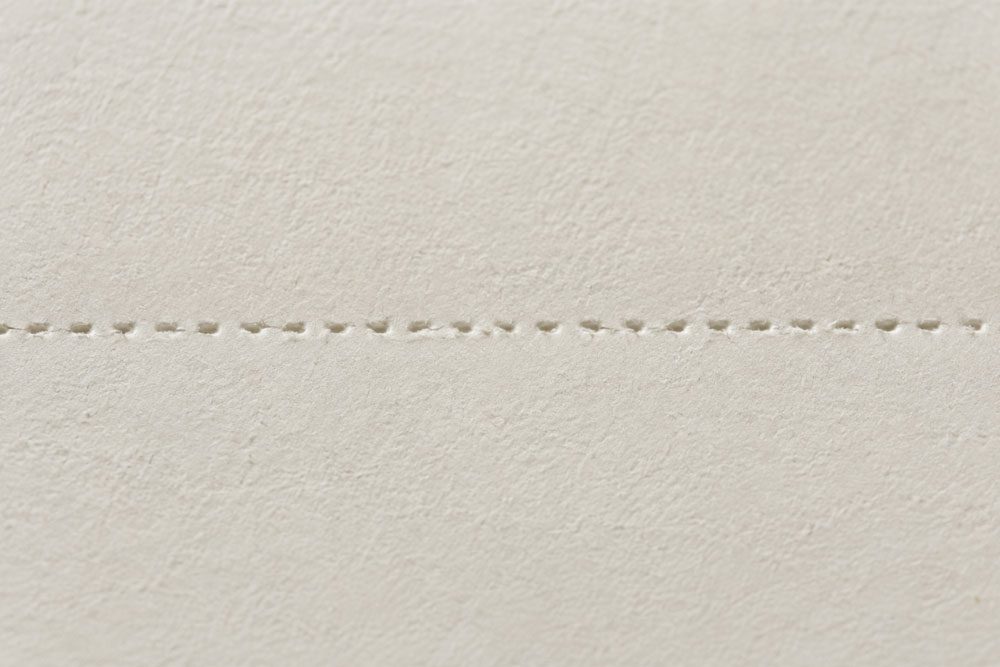
Perforated paper—often simply called perf paper—has a line of small cuts separated by uncut spaces, commonly referred to as cuts and ties. The cuts make the paper easy to tear, while the ties keep the sections connected until you're ready to separate them.
This makes it possible to print multiple pieces, forms or detachable sections together on a single sheet. When needed, simply fold along the perforated line and tear to cleanly separate the sections.
Standard and Custom Perforations
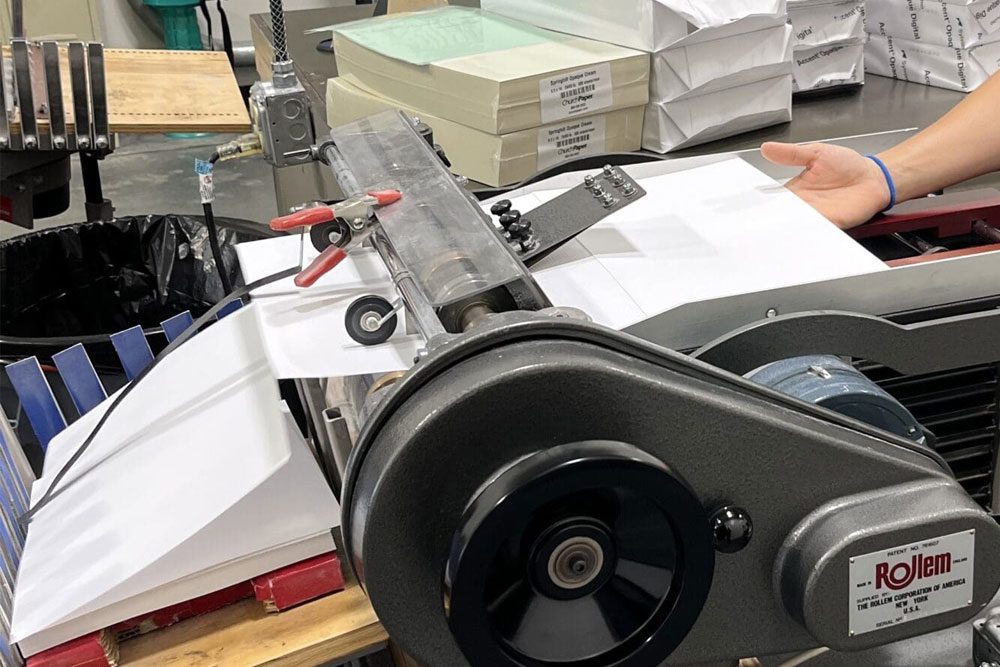
Church Paper offers a variety of popular standard perforation configurations for common applications, as well as custom perforating services for projects with unique requirements.
Whether you need a simple tear-off section, multiple detachable pieces or a specialized layout for a business form, mailing or promotional piece, we can perforate many of our papers and cardstocks to fit your specific needs.

Popular Perforation Configurations
Church Bulletins
A church bulletin with a perforation creates a tear-off portion that can be used for prayer requests, giving information or response forms.
Business Invoices
A perforation near the bottom or side of a business invoice or form creates a detachable payment stub, remittance slip or receipt.
Postcard Perforations
Multiple perforations divide a sheet into three postcards or four postcards that can be printed together and separated afterward.
Promotional Mailers
A horizontal or vertical perforation creates a detachable ticket, receipt, payment stub, coupon or response section.
Door Hanger Perforations
Special perforation patterns allow sheets to be printed and separated into two door hangers or three door hangers.
Ticket and Form Perforations
A horizontal or vertical perforation creates a detachable ticket, receipt, payment stub, coupon or promotional section.
Deep Dive: How Paper Perforation Really Works ↴
Cuts, Ties and the Strength of a Perforation
A perforated line may look simple, but the relationship between its cuts and uncut spaces helps determine how the sheet performs.
The cuts weaken the paper along a controlled line, making it easier to tear. The small ties between those cuts keep the sheet intact during printing, handling and normal use.
A perforation therefore needs to strike a balance: it should be strong enough to remain together when you want it to, but easy enough to separate when it's time to tear.
Not all perforations are the same.
The size and spacing of the cuts and ties can be adjusted depending on the paper and its intended use. A perforation designed for a lightweight sheet of paper may not be ideal for heavier cardstock, and a piece that needs to remain securely attached during handling may require a different perforation than one designed for easy removal.
Paper weight, thickness, fiber characteristics and intended application can all influence the appropriate perforation.
Why Use Perforated Paper Instead of Cutting?
The biggest advantage of perforation is that the pieces remain connected until they're needed.
For example:
A church bulletin can include a response card without requiring an insert.
A business invoice can include a customer payment stub or receipt.
An event flyer can contain a detachable ticket or registration form.
That can make printed materials easier to distribute, organize and use, while reducing the need to produce and handle multiple separate pieces.
Printing on Perforated Paper
Perforated paper can be printed on many standard office printers and copiers just like regular paper. Because printers vary, always check your machine's specifications for supported paper sizes and weights before printing.
For the best results, fan or separate the sheets before loading them.
This helps prevent the perforated edges from catching or sticking together and reduces the chance of multiple sheets feeding through the printer at once. Printer manufacturers also commonly recommend fanning paper before loading to help prevent misfeeds.
If your printer has a manual feed or bypass tray, consider using it for perforated paper.
Bypass trays are designed for manually feeding specialty papers and may provide a more direct paper path through the printer.