
The Paper Guide Paper Brightness
Home > The Paper Guide >
Paper Brightness
Understanding Paper Brightness
Paper brightness is one of the characteristics that affects how white paper looks and how printed colors appear on the page. Higher brightness papers reflect more light and can create a clean, crisp appearance with stronger contrast between the paper and printed text or images.
But brightness isn't quite the same thing as how "white" a sheet looks. Here's what those brightness numbers actually mean—and when they matter.
The Basics: Paper Brightness at a Glance ↴
How is Paper Brightness Measured?
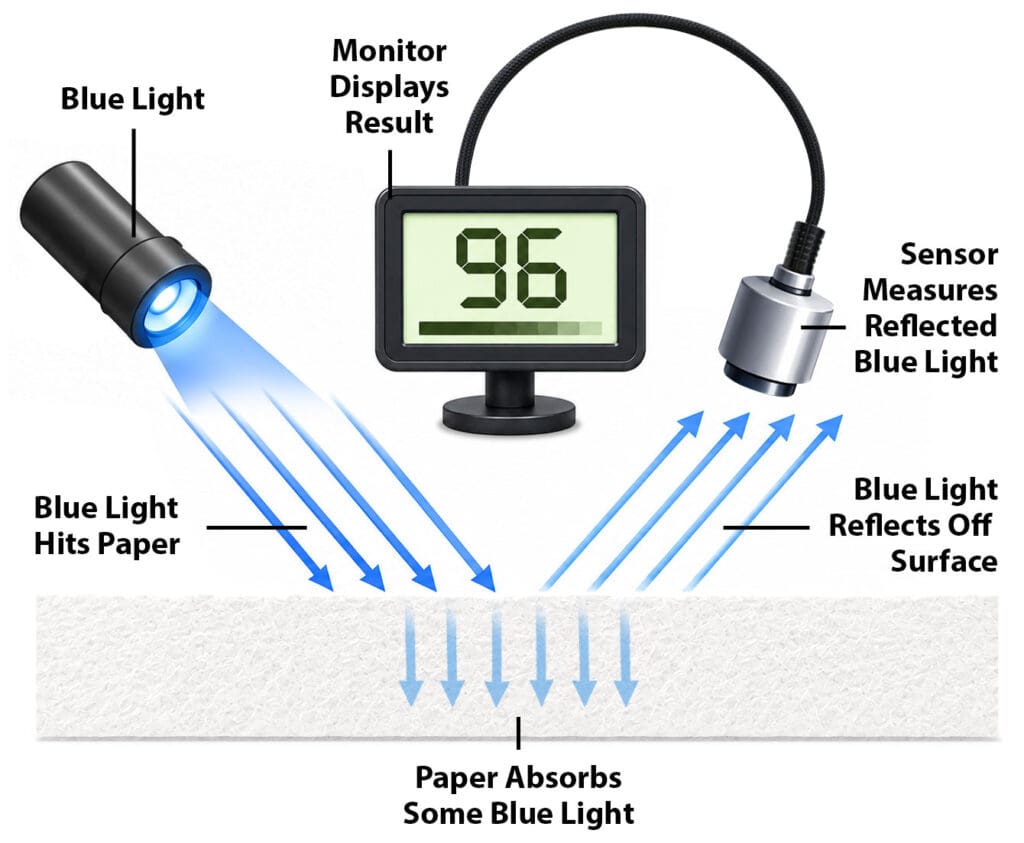
Paper brightness measures how much blue light is reflected from the surface of the paper. It is commonly expressed as a number, such as 92, 96 or 98. The most common paper brightness is typically between 90 – 100.
For everyday paper shopping, the easiest way to think about it is:
The higher the number, the brighter the paper.
A higher brightness white paper can provide greater contrast with printed text and make colors appear more vibrant. Lower brightness papers may have a softer or warmer appearance.
Popular Paper Brands Brightness Comparison
| Brightness | Brands | |||
|---|---|---|---|---|
| 90 | Blazer Digital Coated | |||
| 92 | X-9, Tidal, Springhill Cardstocks | |||
| 94 | Williamsburg, Sterling Premium Digital | |||
| 97 | Accent Opaque, Polaris | |||
| 98 | Mohawk Color Copy, Hammermill Laser Print | |||
| 100 | Hammermill Color Copy |
Paper Brightness Quick Reference Scale
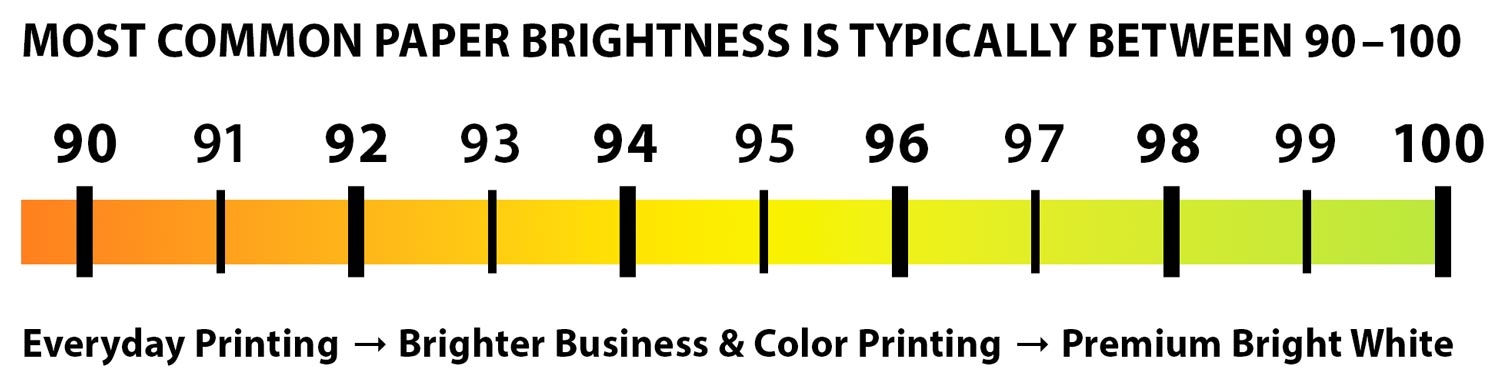
Suggested Paper Brightness Applications
| Brightness | Applications | |||
|---|---|---|---|---|
| 90 – 92 | A common brightness for everyday copy and multipurpose papers. It provides a clean white appearance suitable for general office printing, forms, correspondence and everyday documents. | |||
| 94 – 96 | A brighter white that works well when you want increased contrast and a cleaner looking sheet. These papers are a good choice for presentations, reports, marketing materials and documents containing color. | |||
| 97 – 100 | Very bright white papers designed for applications where crisp text, strong contrast and vibrant color reproduction are important. These are often used for premium presentations, graphics, photographs and other high-quality printed materials. |
Deep Dive: How Paper Brightness Really Works ↴
The Science Behind Paper Brightness
Paper brightness isn't determined simply by looking at a sheet and deciding how white it appears. Specialized instruments measure the amount of light reflected from the paper under controlled conditions.
In one of the primary methods used by the North American paper industry, the paper is exposed to blue light centered at a wavelength of 457 nanometers (nm). The amount of that light reflected from the paper is used to determine its brightness value. This is why brightness is technically different from whiteness:
Brightness is based on a specific portion of the visible light spectrum rather than the entire range of light our eyes use to perceive white.
Why Blue Light?
Paper naturally tends to absorb more light toward the blue portion of the visible spectrum. As paper is processed and brightened, its ability to reflect blue light increases.
Measuring blue light reflectance therefore provides the paper industry with a standardized way to evaluate and compare the brightness of white and near-white papers.
Why Can Papers with the Same Brightness Look Different?
Imagine placing three sheets of 94 brightness paper next to each other. One might look like a cool blue, one may appear relatively neutral, and one may look slightly warm or creamy. All three can legitimately have the same brightness rating.
That's because:
The brightness number measures a specific optical property—it doesn't completely describe the paper's color.
White paper can have different undertones or shades. The shade you choose can affect the overall appearance of the finished piece even when the papers have similar brightness ratings.
Cool Shade
A cooler white that can appear especially crisp and bright.
Neutral Shade
A more balanced white without a pronounced warm or cool cast.
Warm Shade
A softer white with warmer undertones.
Does Higher Brightness Always Mean Better Print Quality?
No. Brightness can contribute to excellent print results, but it doesn't determine print quality by itself.
A coated paper with a lower brightness rating, for example, can reproduce photographs and colors extremely well because its smooth coated surface controls how ink or toner sits on the sheet. Likewise, an extremely bright uncoated paper isn't automatically the best choice for every project.
When choosing paper for high-quality printing, consider brightness along with:
Paper Finish
Affects smoothness, ink holdout and image reproduction.
Whiteness and Shade
Influence the overall color appearance of the sheet.
Opacity
Determines how much printing shows through from the opposite side.
Paper Weight and Thickness
Affect the feel and rigidity of the finished piece.
Printer Compatibility
Helps ensure the paper performs properly with your printing process.